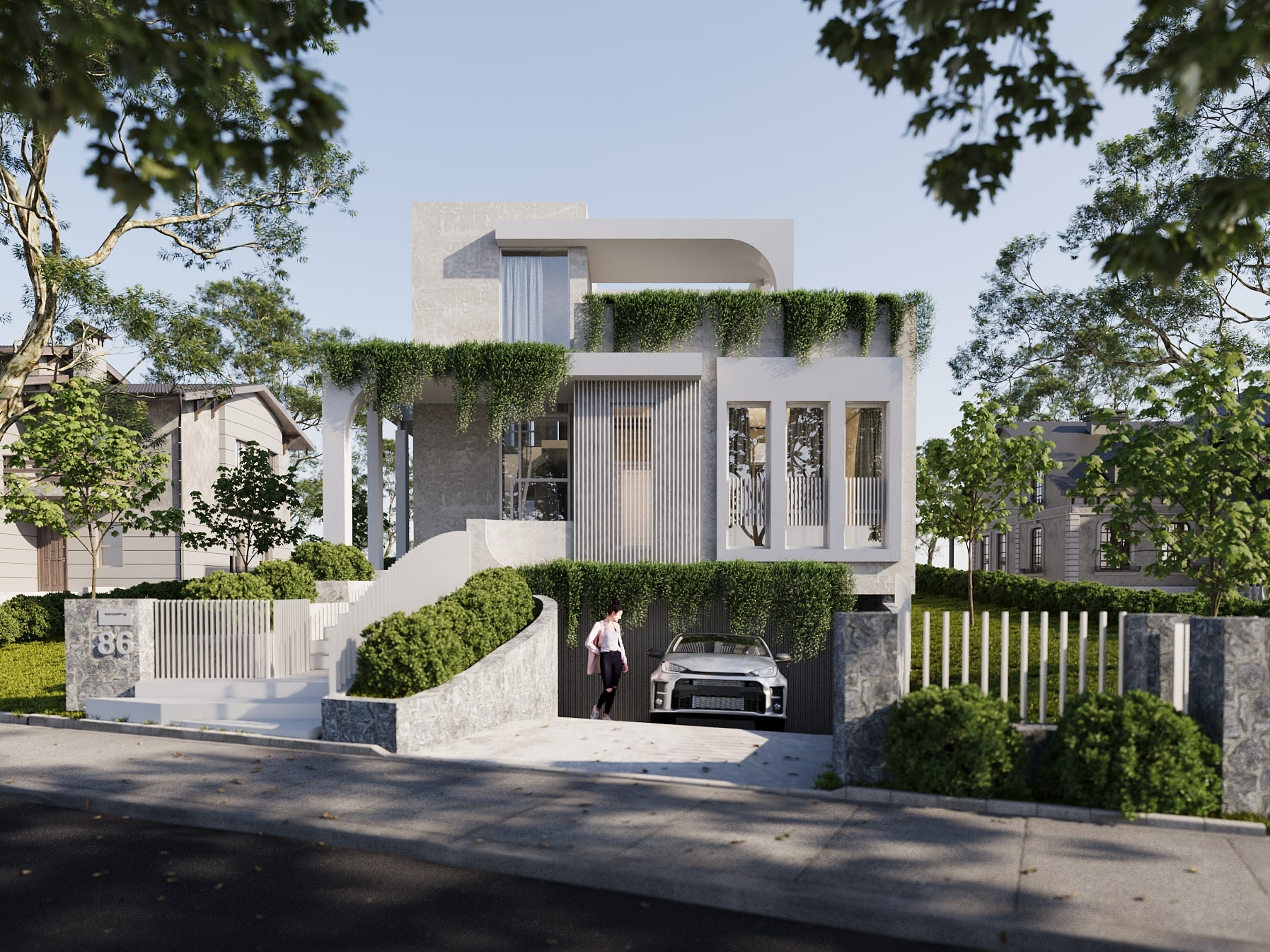


The NSW Government is continuing its broader planning reform program with a new Discussion Paper focused on improving the way Development Applications (DAs) are prepared, lodged and assessed across the state. Following the recent consultations on Low-Rise Housing and Targeted Assessment and Variations and Changes to Complying Development, this latest proposal shifts the focus from …

The NSW Government has released an Explanation of Intended Effect (EIE) proposing a new statewide approach to conditions of consent issued with development approvals. While conditions of consent are an important part of every development approval, they can currently vary significantly between councils. This often means conditions need to be individually drafted, reviewed and negotiated …
The NSW Government is continuing its broader planning reform program with a proposed new approach to complying development that aims to introduce greater flexibility for straightforward residential projects. Unlike the recently exhibited Low-Rise Housing and Targeted Assessment Discussion Paper, which sought feedback on potential future planning reforms, this proposal has progressed to the next stage …
The NSW Government is continuing its work to reform the planning system through the proposed Low-Rise Housing and Targeted Assessment framework. While the public exhibition of the discussion paper has now concluded, the proposal remains under consideration, with the Department of Planning, Housing and Infrastructure (DPHI) reviewing submissions before determining the next stage of the …
The Low and Mid-Rise Housing Reforms – Phase 2 launches in NSW, with key changes taking effect from 28 February 2025. The reforms expand planning provisions for dual occupancies, terraces, multi-dwelling housing, and residential flat buildings in designated areas. New non-discretionary standards streamline approvals, overriding local planning controls.
With the recent amendment to the State Environmental Planning Policy (Housing) 2021, NSW Government is committed to reaching the National Housing Accord target of 377,000 homes by mid-2029. In order to achieve this, the Minns Government is holding local and state governments accountable through a range of performance measures. The Housing SEPP amendment has brought …
In alignment with the National Housing Accord and following on from the proposal for low- and mid-rise reforms that went on exhibition from 15 December 2023 to 23 February 2024, NSW Government has introduced new amendments to the State Environmental Planning Policy (Housing) 2021. The aim of these reforms is to increase supply of low-rise …
Today, the Department of Planning and Environment placed on exhibition a document to help accelerate housing delivery in NSW. This document suggests some changes to the low rise housing diversity code that impacts dual occupancies, manor houses and terraces but also brings in multi dwelling housing, residential flat buildings and shop top housing; all of …
Continue reading “Introducing the Mid Rise Housing Diversity Code”
NSW Government’s Construct NSW strategy aims to restore consumer confidence by focusing on reform in 6 key areas of the building and construction industry. These include regulation, ratings, education, contracts, digital tools, and data and research. Led by the Office of the Building Commissioner (OBC), the changes will affect all building classes and stakeholders, including …
Continue reading “NSW Government ambitious plan to transform building industry”
In the wake of recent natural disasters and COVID-19, the NSW Government is committing to a plan that will see the revival of regional NSW.
A new approach to rezonings in NSW is here. Read more from es.au.
In working towards a net zero target by 2050, NSW Government has proposed an increase to BASIX standards for new residential buildings.
Following the Building Ministers’ Meeting (BMM) that took place on 30 April 2021, a consensus to include minimum accessibility provisions in the National Construction Code (NCC) 2022, was reached.
Following a recent Independent Commission Against Corruption (ICAC) Inquiry (Operation Dasha), the NSW planning department is exhibiting an Explanation of Intended Effect (EIE) that seeks to gather public feedback on new measures to improve the planning system.
The City of Parramatta Council has proposed a new Local Environmental Plan (LEP) to consolidate and replace the existing five planning controls that provide the legal guidelines for development and land use.
The Home Building Act 1989 regulates the residential building industry and certain specialist work in New South Wales. It addresses any residential works carried out by contractors and tradespersons, including construction of a new home and renovations or alterations to an existing home or structure.
A new Housing Diversity State Environmental Planning Policy (Housing Diversity SEPP) is likely to have an adverse effect on private developers.
The introduction of the (formerly) Low Rise Medium Density Housing Code in July 2018 aimed to provide more liveable and affordable housing arrangements for growing families and empty nesters within existing neighbourhoods and streetscapes.
For new developments that require local infrastructure and services, Council may collect a developer/local infrastructure contribution to help fund the provision.
While the new process for documenting Performance Solutions is not yet mandatory, practitioners are encouraged to exercise the steps outlined in A2.2(4) from now. The Australian Building Codes Board (ABCB) has put together a guide to assist in this transition.
In a bid to boost community confidence, the NSW Government has introduced a new legislation that aims to tackle ongoing issues with the building of residential apartments.
While many recent changes to legislation in the construction and land development industries have sought to improve the economic effects of COVID-19, a significant amendment to the Environmental Planning and Assessment Regulation 2000 (NSW) (EPA Reg) has seen the barrier to ‘physical commencement’ heightened.
Developers and landowners can breathe a sigh of relief as NSW Parliament introduces new amendments to the Environmental Planning and Assessment Act 1979 (NSW) (EPA Act) that aim to alleviate time pressures in the construction industry.
Since being introduced in 2004, the Building Sustainability Index (BASIX) requirements have set the ground rules for thermal comfort performance and water and energy usage within residential dwellings.
The NSW Government is seeking feedback on a new simplified Housing Code which sets out clear and simple planning rules for works that can be carried out under complying development.
NSW Fair Trading released a new guide to assist home owners and contractors if building work is in dispute.
The NSW Government has announced that the BASIX energy targets will be increased across the State in July 2017.
The General Housing Code is replaced with a new simplified Housing Code which sets out clear planning rules for complying development including one and two storey homes, renovations and extensions.
Experienced planning professionals will lead the panels, which will assess DAs that are sensitive in nature, or where there is a conflict of interest for council or developers.
In light of recent tragedies including Grenfell Tower in London and Lacrosse Building in Melbourne, the NSW Government will soon implement new laws for buildings with combustible cladding.
The NSW Government is making improvements to reinforce the building and certification system and up until 30th October 2018, you can have your say.
The National Construction Code (NCC) is an all-encompassing set of on-site construction requirements put together by the Council of Australian Governments (COAG).
The Low Rise Medium Density Housing Code has been deferred to allow for an independent review.
The Environmental Planning & Assessment Act 1979 is a legislation that provides the framework for the use of land in New South Wales.
The introduction of the new Low Rise Medium Density Housing Code in July 2018 aimed to provide more liveable and affordable housing arrangements for growing families and empty nesters within existing neighbourhoods and streetscapes. It has currently been implemented across 82 council areas in NSW and there are plans for the remaining 45 to adopt …
Continue reading “The Low Rise Medium Density Housing Code (MDHC) has been deferred again”
Canterbury LEP 2012 has just been amended (Amendment No 16). Clause 4.1C has been added to the LEP requiring minimum lot sizes and lot widths for Boarding Houses in its Residential Zones.
In line with NSW Government’s plan to deliver a final Design and Building Practitioners Bill 2019 by the end of the year, a draft will be open for public feedback until 16 October 2019. The Bill comes as a response to the April 2018 Building Confidence Report compiled by Professor Peter Shergold and Ms Bronwyn Weir. It …
Continue reading “Draft Design and Building Practitioners Bill 2019”
Currently, builders and tradies insured under the Home Building Compensation Fund (previously known as Home Owners Warranty) are subject to a capped amount of insurance they can purchase each year, restricting the number of projects that can be taken on.
A Review of Complying Development for Inland NSW’ sets out proposed changes to the State Environment Planning (Exempt and Complying Development Codes) 2008 will apply to all residential complying development for 83 local government areas west of the Great Dividing Range.
The Department of Planning and Environment (the Department) is examining opportunities to provide
greater housing choice and better design for medium density housing across NSW.
The department of planning has launched a suite of new online tools to help modernise the planning system in NSW and make it easier for people to access planning information.
The Australian Building Ministers’ Forum agreed in principle to make the 2015 National Construction Code (NCC) and future editions freely available online, significantly contributing to reducing the burden of building regulation.
Swimming pool owners have until the 29th of October 2013 to register their swimming pool, or a minimum fine of $220 (maximum $2,200) may be imposed.
A review of the NSW planning system has taken place. This has resulted in a new planning system for NSW.
The proposed changes to charge for BASIX Certificates put forward in November, 2010 to the Environmental Planning and Assessment Regulations 2000, will come into effect 1st July, 2011.
State Government in an aim to clear up grey areas and combat misuse of SEPP (Affordable Rental Housing) 2009 have enforced the following changes
The NSW Government’s planning reform program continues to evolve, with one significant change already in effect.
While recent reforms relating to Low-Rise Housing, Complying Development Variations and Improving Development Assessment remain at various stages of consultation, the Development Coordination Authority (DCA) has now commenced operating and is changing how government agency input is managed during the Development Application (DA) process.
The DCA officially commenced on 1 July 2026 following consultation earlier this year and the subsequent finalisation of the reforms by the NSW Department of Planning, Housing and Infrastructure (DPHI).
Unlike the other planning reform initiatives currently being consulted on, this is not a proposal. The new framework is now operational and applies to relevant Development Applications across NSW.
For property owners, developers, architects and building designers, the change is intended to make one of the more complex parts of the planning system simpler, more consistent and easier to navigate.
What is the Development Coordination Authority?
The Development Coordination Authority (DCA) is a new function within the NSW planning system responsible for coordinating statutory advice from government agencies during the assessment of Development Applications.
Many Development Applications require input from government bodies before a consent authority can determine the application. Previously, applicants and consent authorities often needed to engage with numerous government agencies separately throughout the assessment process.
The DCA now provides a central coordination point for these statutory inputs, helping to streamline how referrals are identified, managed and resolved.
Rather than changing which developments require agency input, the reform changes how both statutory and advisory input are coordinated, with the objective of making the process more efficient and consistent.
Why was it introduced?
Before the introduction of the DCA, applicants, councils and other users often needed to navigate numerous parts of the NSW Government to determine whether referrals or concurrences were required.
According to DPHI, this could involve dealing with up to 22 different areas of government.
More than 800 separate statutory triggers for agency referrals and concurrences were dispersed throughout 175 different planning instruments, making it difficult to consistently identify which requirements applied.
The DCA was introduced to simplify this process by providing a more coordinated framework for managing statutory agency input.
What has changed since 1 July 2026?
A single framework for statutory agency input
The DCA has introduced a consolidated framework for statutory inputs on Development Applications. More than 800 statutory triggers that were previously spread across 175 planning instruments are now administered through a single coordinated framework.
Earlier confirmation of statutory referrals
The DCA now verifies at an earlier stage whether statutory consultation or concurrence is required for a Development Application. This provides greater certainty early in the assessment process and helps reduce unexpected referral requirements later in assessment.
A consistent 28-day timeframe
The DCA and participating government bodies now work to a standard 28-day timeframe (from the date of formal referral request and where required fees have been paid) for providing statutory input on Development Applications. This creates greater consistency and more predictable assessment timeframes.
A simpler fee structure
The reforms have also introduced a simpler and fairer fee structure for statutory referrals and concurrences, making costs easier to understand and administer. This includes increated costs from $426 to $1100 for concurrence or integrated development approval, new fee of $1100 for statutory referral and fee of $550 for each statutory input required from the DCA for complex modification applications. Fees would not be applied to advisory inputs, input on modifications with low environmental impact, referrals required under Sydney Water Act 1994 or Hunter Water Act 1991, input from organisations outside NSW.
What this means for property owners and developers
The establishment of the DCA does not change the planning merits against which Development Applications are assessed or the information generally required to support an application.
Instead, it changes how statutory agency input is coordinated.
For applicants, this means fewer government agencies to navigate directly, earlier confirmation of referral requirements, more predictable timing for agency responses and a more streamlined referral process overall.
For architects, building designers and developers working across multiple council areas, the reforms provide a more consistent framework for managing statutory agency input throughout the assessment process.
Closing
The Development Coordination Authority is now an established part of the NSW planning system and has been operating since 1 July 2026.
Unlike several other planning reforms that remain under consultation, the DCA has completed the consultation process and is now in effect.
As NSW’s broader planning reform program continues to evolve, the DCA represents one of the first major reforms to move from policy development into day-to-day operation, providing a simpler and more coordinated approach to statutory agency involvement in Development Application assessment.